Pierre Bouras / America's Cup
WHY DID THE FRENCH SPEND THE DAY CALIBRATING THE MAST?
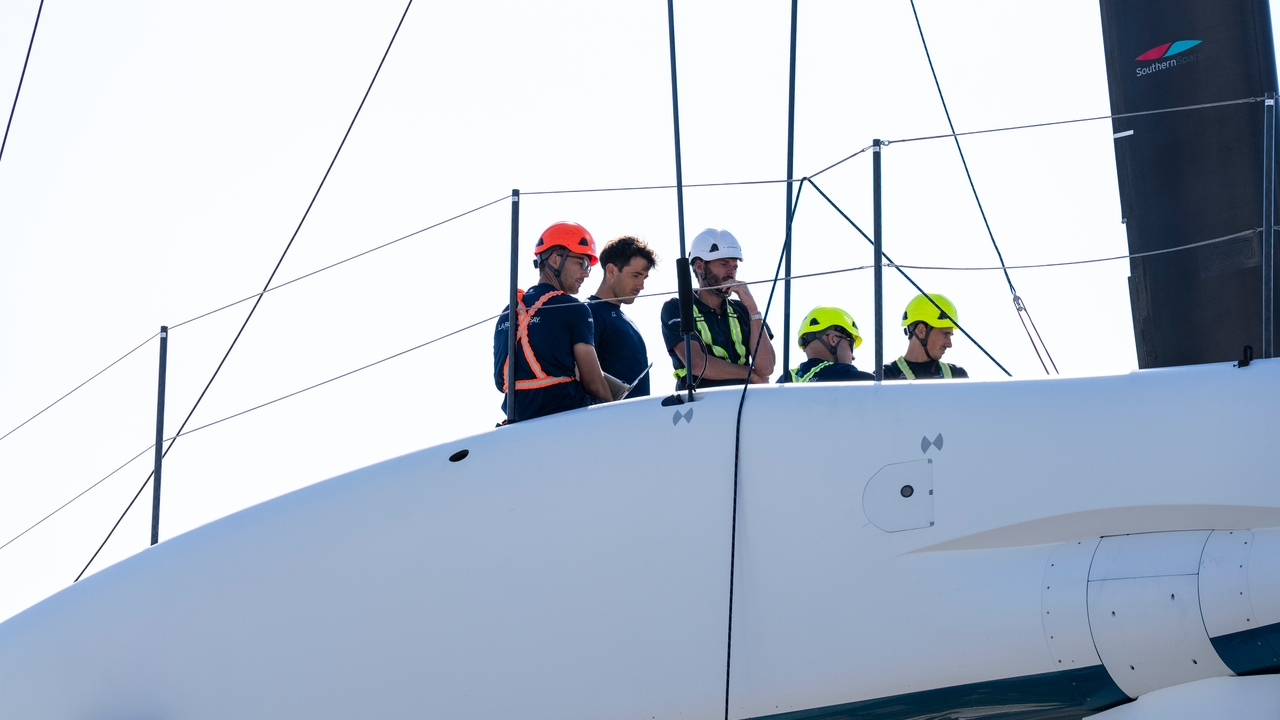
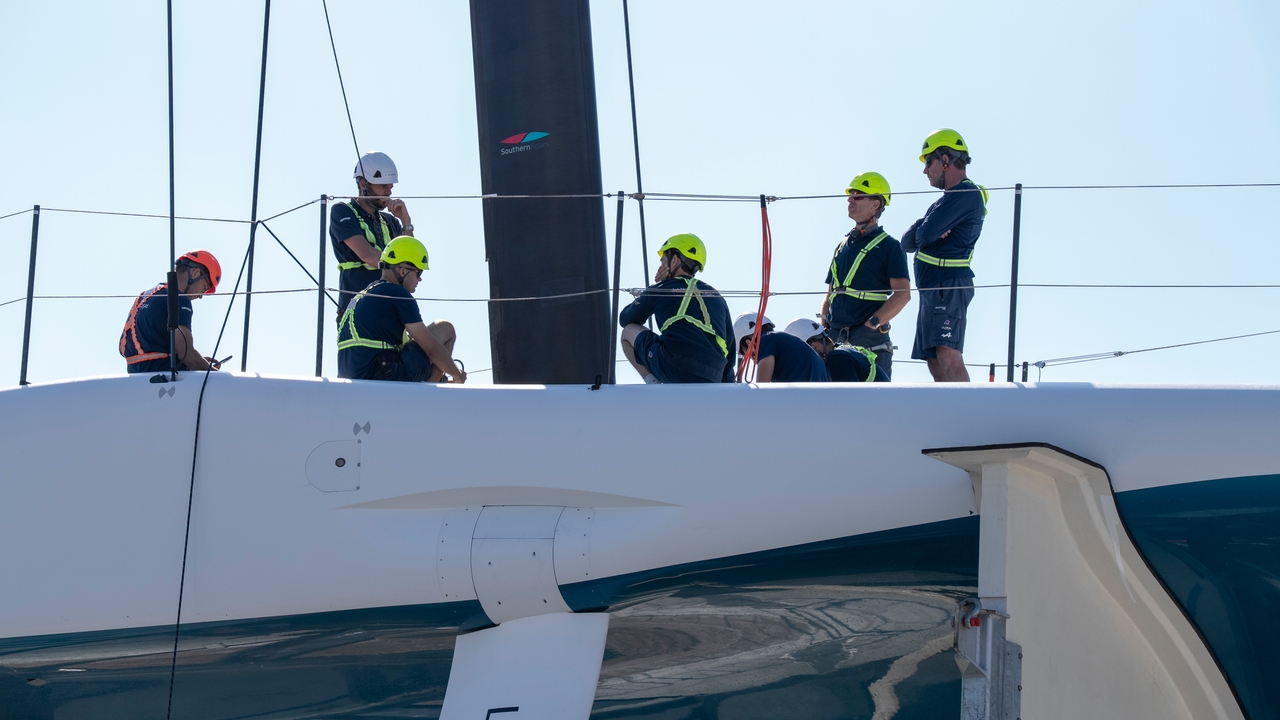
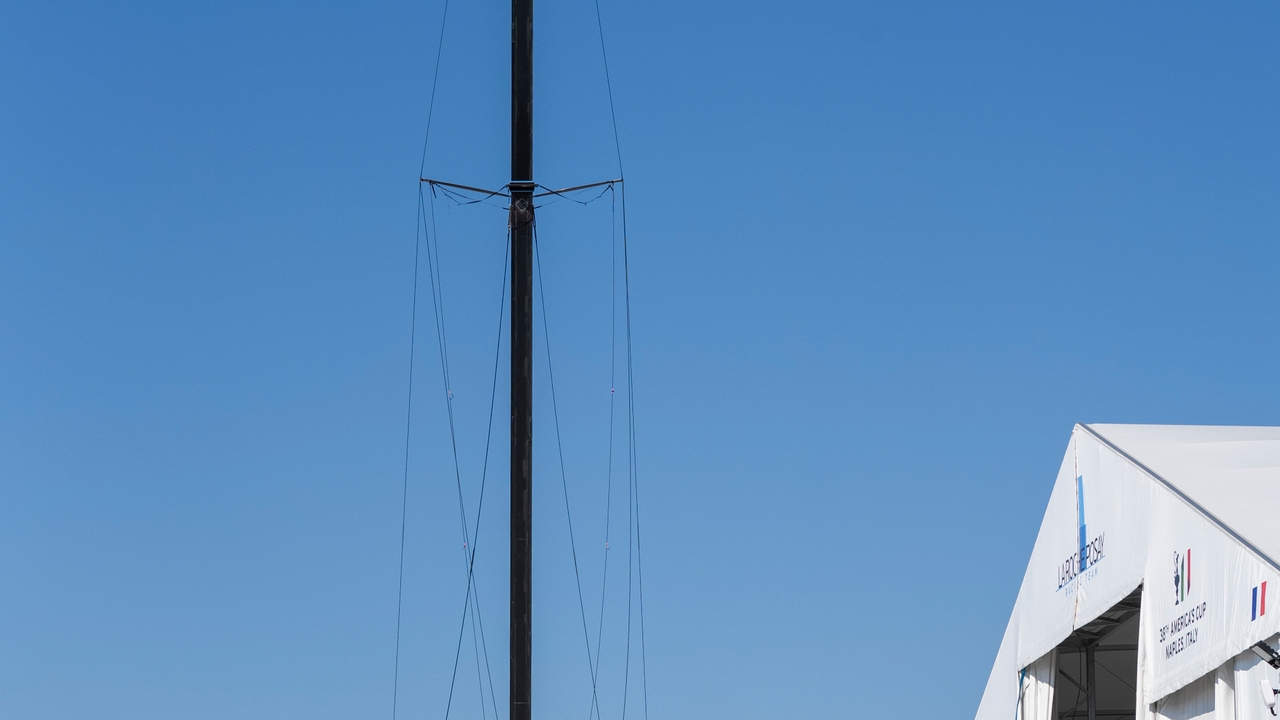
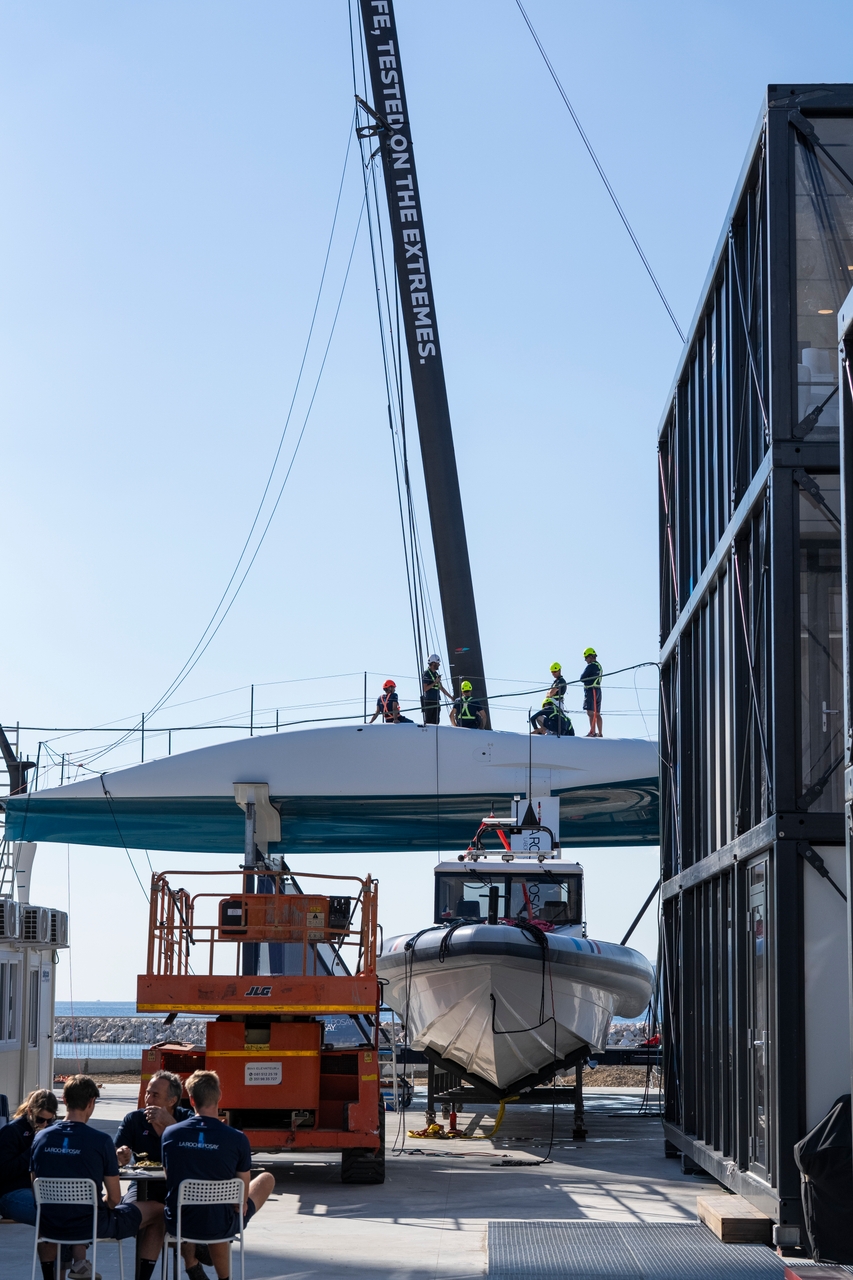
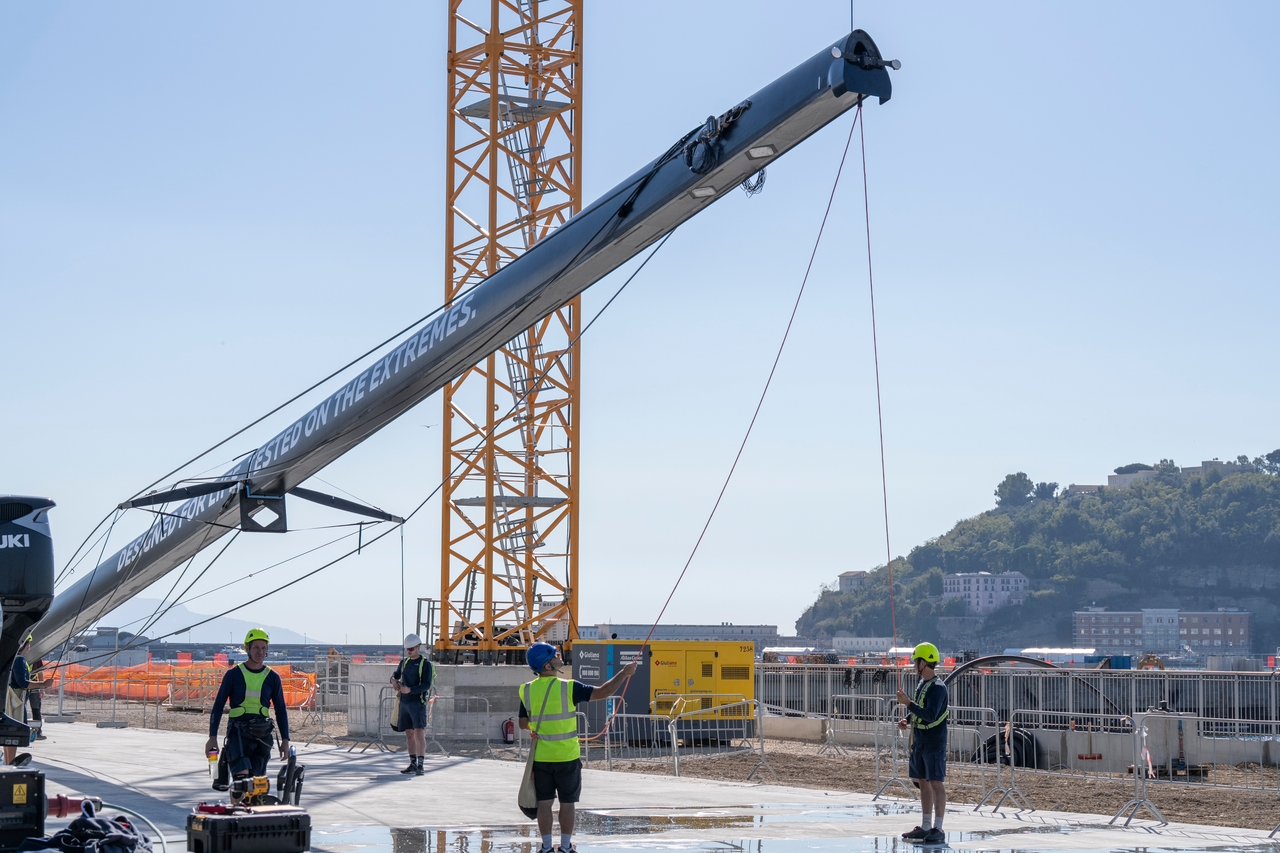
La Roche-Posay Racing Team's latest shore session offered a revealing glimpse into the precision engineering behind the modern America's Cup. With independent load cells fitted to both cap shrouds, the lower shrouds left slack and technicians monitoring the rig from laptops, the French appeared to be establishing a calibrated relationship between mast loading and geometry.
Rather than a routine rig tune, the exercise suggested a systematic attempt to validate the measurement systems and structural models that underpin AC75 sail development. Whether prompted by a specific discrepancy or simply part of the team's planned development programme remains the great unknown. The full Recon Report is below the analysis.
Pierre Bouras / America's Cup
ARE THE CAP-SHROUD READINGS THE BIGGEST CLUE?
The Recon team reported some very interesting loading readings that they were able to capture from the small square they are confined to. The port cap shroud had a ‘6,860' reported display reading and the starboard cap shroud had a ‘6,752’ reported display reading, however the unit of measurement was not legible in the recon report. The difference is 108 display units, approximately 1.6% of their average reading.
If the instruments were reading kilogram-force, each cap shroud was carrying approximately 66–67 kilonewtons of tension. That is a substantial load. The small difference between port and starboard could reflect deliberate asymmetry, calibration differences, rig geometry or normal measurement variation. It does not, on its own, establish a problem. What matters more is that the technicians were apparently measuring the two cap shrouds independently and simultaneously.
Pierre Bouras / America's Cup
WHY LEAVING THE LOWER SHROUDS SLACK IS SO SIGNIFICANT
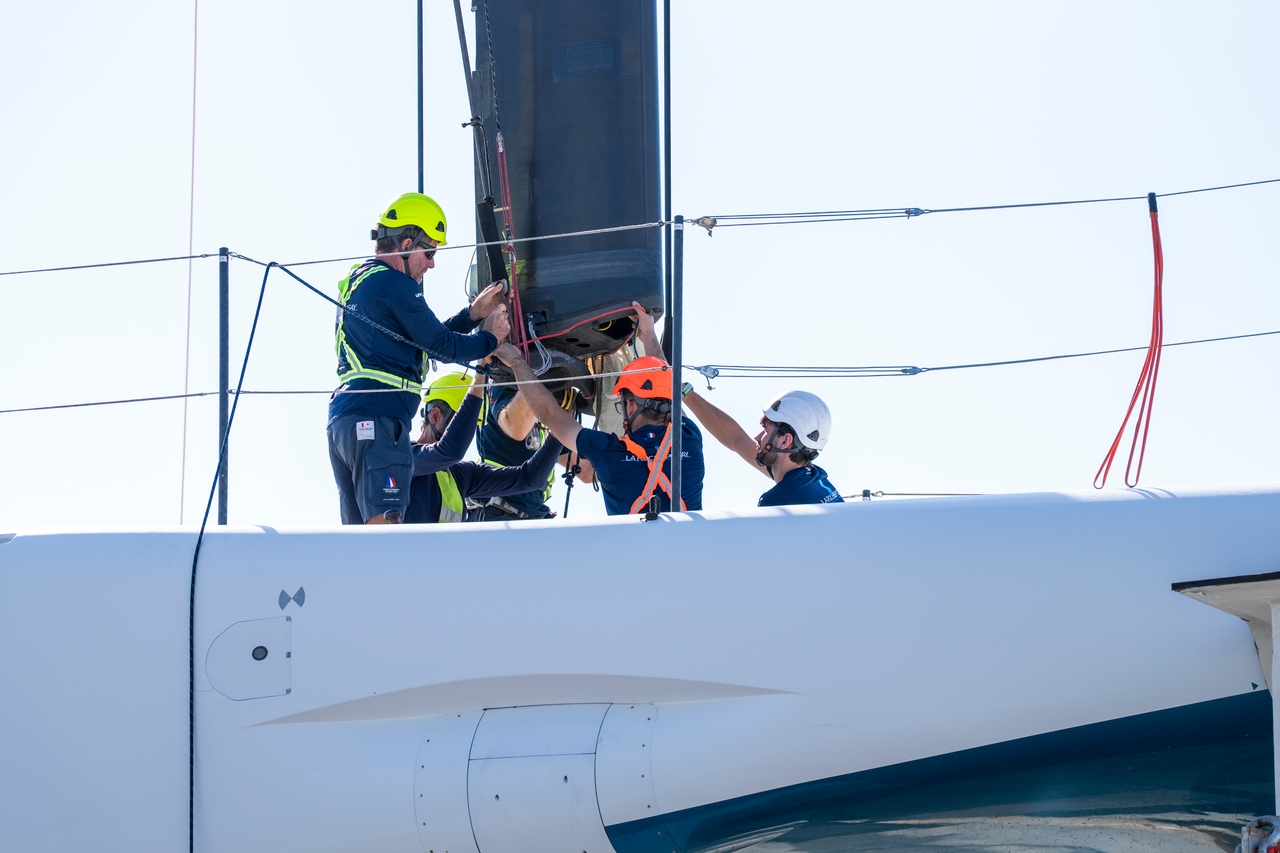
This is the strongest evidence that the exercise was more sophisticated than conventional rig tuning. Ordinarily, the lower shrouds contribute to controlling mast shape, particularly the lower and middle sections. By keeping them slack, the engineers effectively removed one set of structural constraints thus making the mast's response to cap-shroud loading easier to isolate.
The engineers could be trying to answer three specific questions: What mast rake and bend results from a known pair of cap-shroud loads? Does the mast respond symmetrically when the port and starboard loads are changed? Do the onboard sensors report the same structural response as the independent reference instruments?
Pierre Bouras / America's Cup
ARE THE FRENCH CALIBRATING AN ONBOARD FIBRE-OPTIC MEASUREMENT SYSTEM?
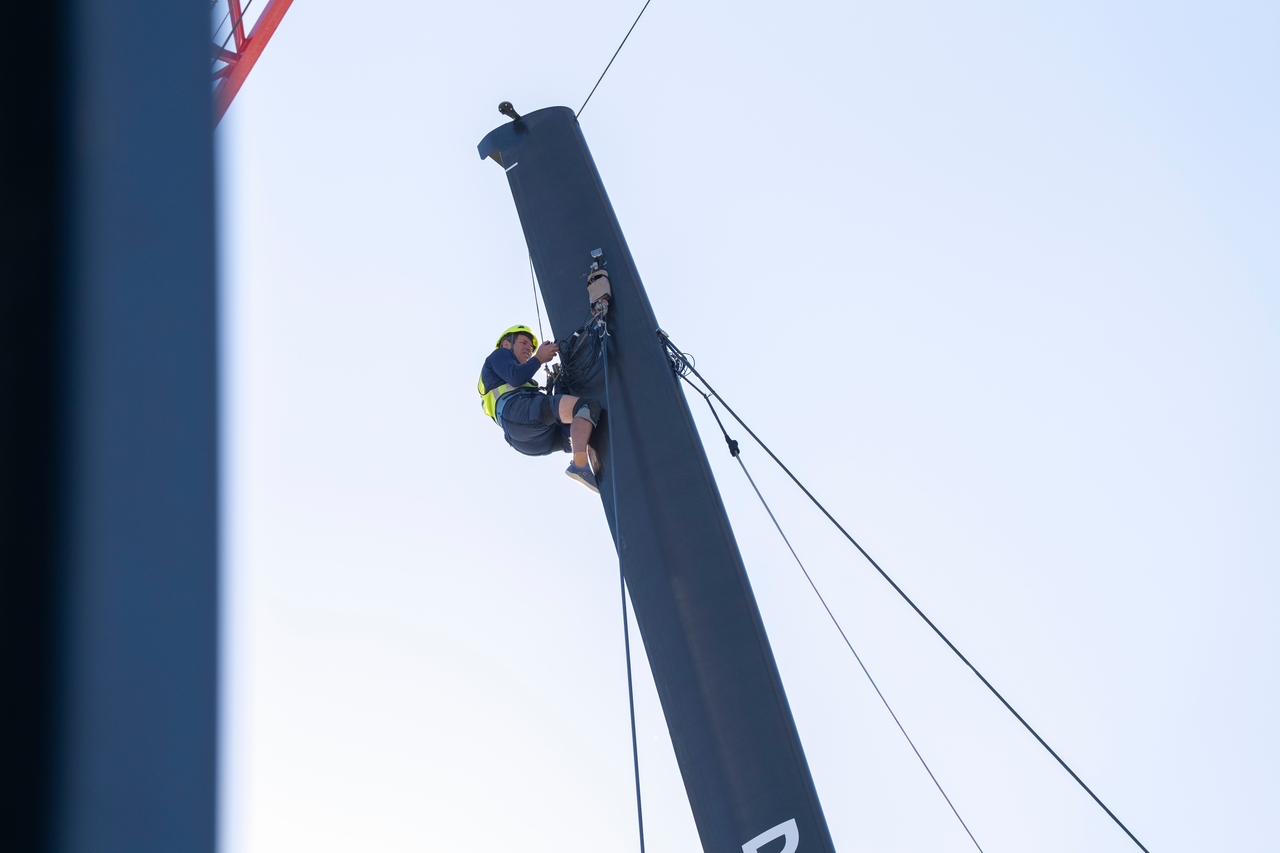
The Recon team mention fibre-optic lines running along the shrouds, observed since the team's Lorient commissioning period. If these are strain-monitoring systems, they may provide a continuous measurement of structural behaviour while sailing. However, those measurements must be calibrated against known physical loads. This is where the temporary load cells become valuable and what the technicians would have been working through is as follows: Apply a known load to the cap shrouds. Record the external load-cell readings. Record the corresponding onboard sensor readings. Measure mast rake, bend and alignment. Compare the data with the structural model. Adjust the calibration coefficients or model parameters. The result is a more reliable relationship between measured rig load and actual mast geometry.
Pierre Bouras / America's Cup
THE CAMERA SPECIALIST IS A PARTICULARLY INTERESTING DETAIL
This may be the most revealing observation in the entire report. If the exercise were solely about setting shroud tension, the prolonged involvement of someone responsible for camera installation would be less obvious. It raises the possibility that La Roche-Posay Racing is developing or validating an optical measurement system.
For example, cameras could be used to measure mast position, mast bend or movement relative to fixed reference points. Such a system might allow engineers to correlate three key datasets in rig load, rig geometry and sail shape. That would help the designers determine not merely how much force is going into the rig, but what physical shape the rig assumes under that force.
Pierre Bouras / America's Cup
WHAT THIS MEANS FOR FRENCH PERFORMANCE
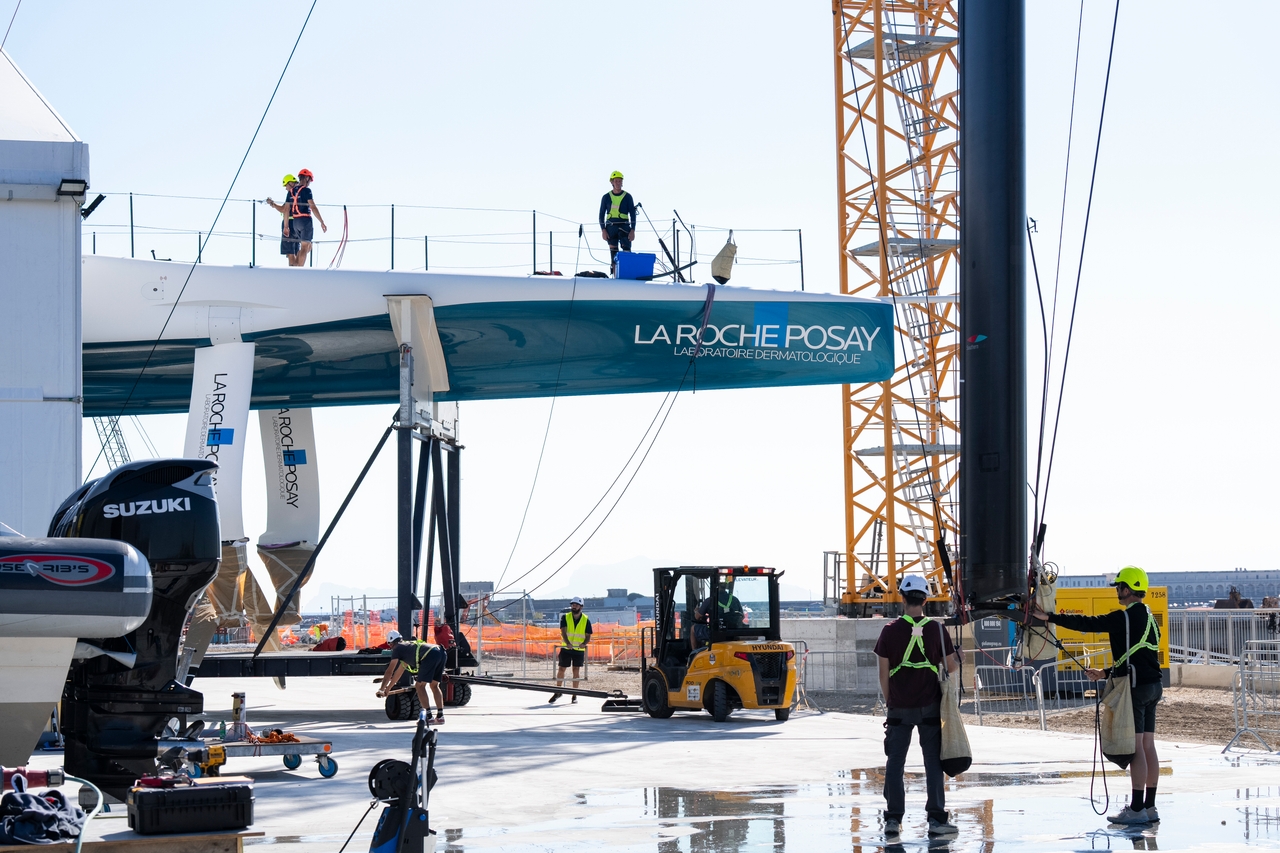
The connection to recent sail-development activity is potentially important. If the team has been testing new sail shapes, the designers need confidence that their assumed mast geometry matches the physical boat, otherwise a disappointing sail test might be incorrectly attributed to the sail design when the real issue is the rig configuration.
Accurate calibration could therefore help the French improve the correlation between simulations and sailing data. Refine mast and sail settings for different wind conditions. Make more reliable comparisons between sail designs. Improve the repeatability of their dock-tune procedures. Understand structural loading and monitor component behaviour. It could also inform sail-control settings or presets so a day on the dock in Naples, checking through the data and mast characteristics could well have been the most important day of the whole campaign.
Pierre Bouras / America's Cup
HOW THE RECON TEAM REPORTED THE SESSION:
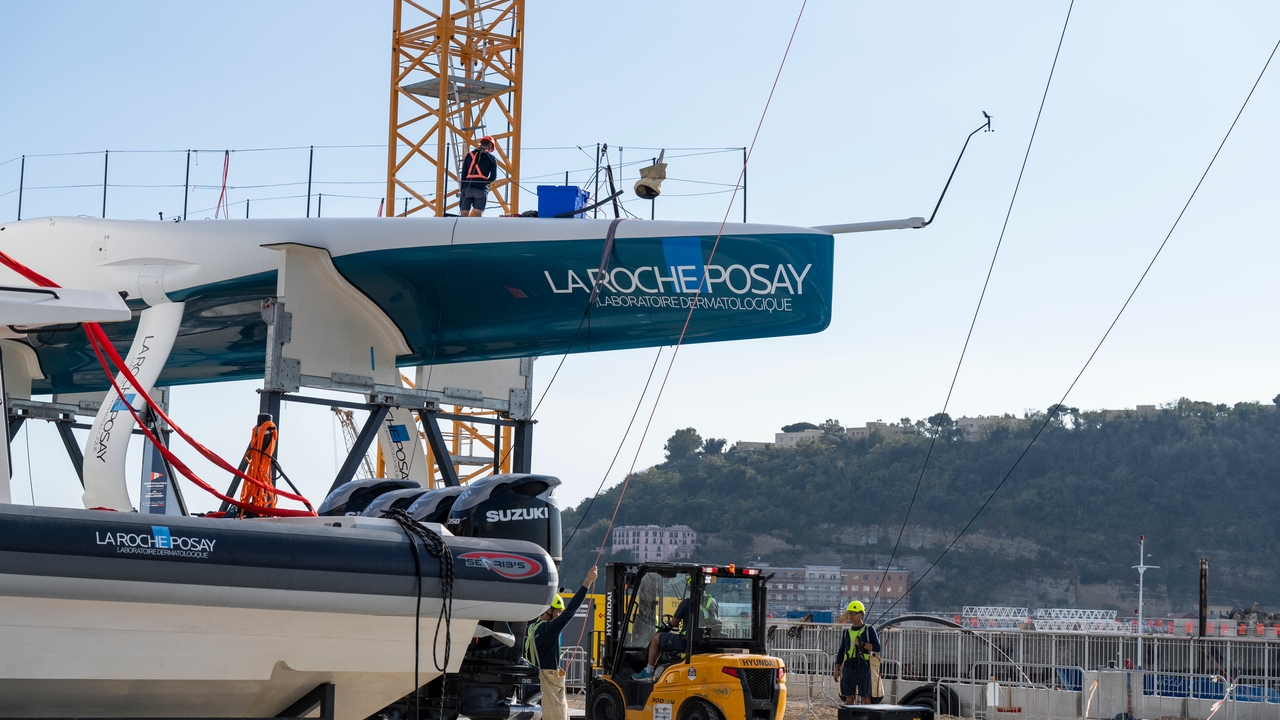
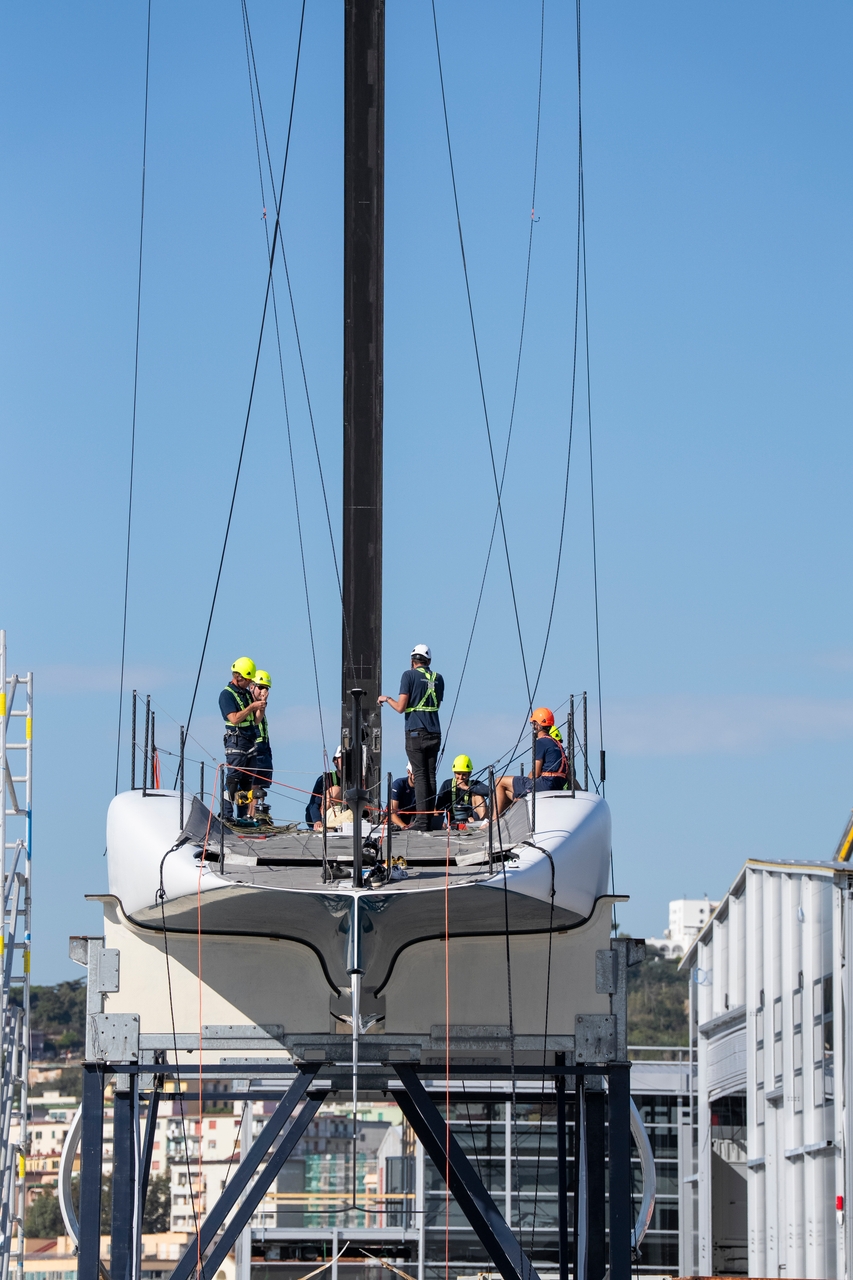
La Roche-Posay Racing Team rolled B1 out at the Bagnoli base for what the team had notified as a rig tune session, with no sailing planned. It was sunny under high pressure, with a light sea breeze from the southwest filling in the early afternoon. The mast rolled out around 12:00 with a load cell fitted at each cap shroud to mast fitting, and B1 rolled out of the shed at 12:15. Both foils appeared covered in a plastic protective film from the white to black paint delimitation on the foil arm down to roughly half of each outer wing, the bulb shaped cameras on both foil arms left uncovered. The starboard new design tip was fully taped, while the outer port legacy winglet tip was left bare, with only its flap taped. Two white marks were visible on the uncovered part of the starboard outer wing and three on the port, the protection appearing consistent with paint work, possibly to apply these marks.
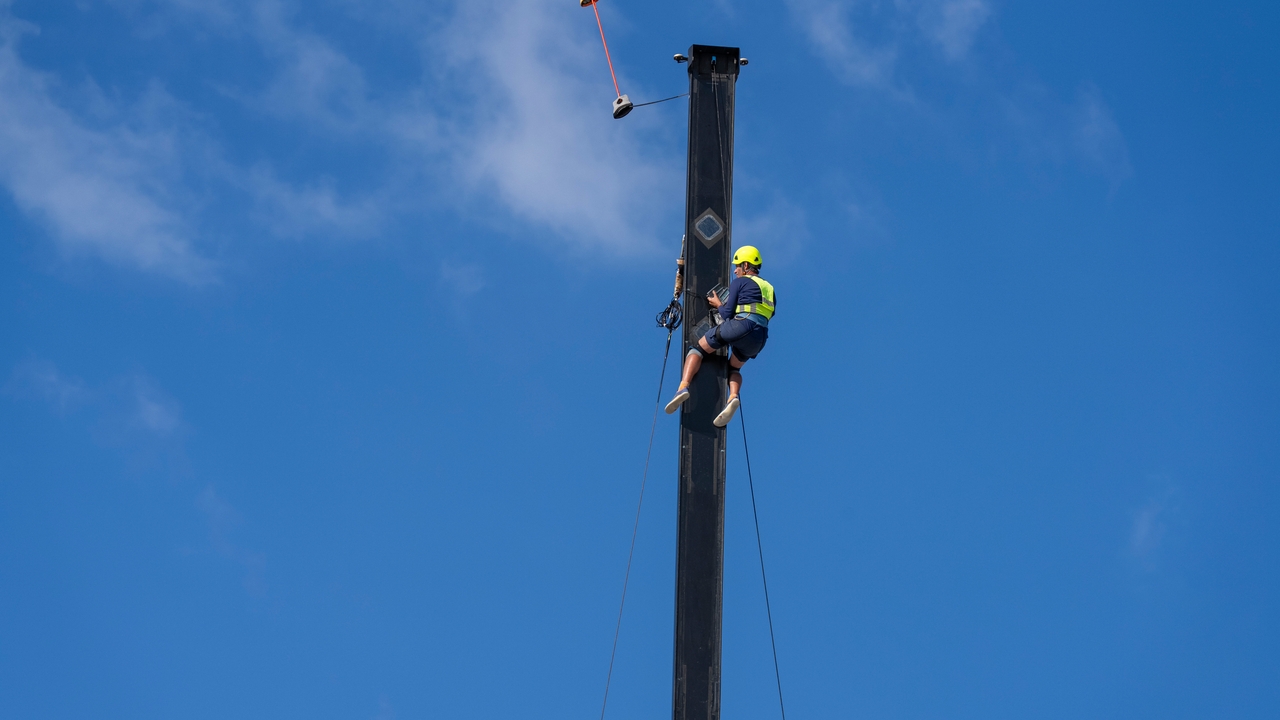
The mast stepping took longer than on a sailing day and appeared to continue the rig set up seen during the previous day's mast stepping. On each cap shroud, the usual link at the mast fitting appeared replaced by an in-line load cell with a cabled handheld display, the signal cable coiled below. Once the mast was stepped with all shrouds fitted and the forestay only partly tensioned, a shore crew member was hoisted to the cap shroud fittings and stayed up the mast for most of the session; the reason he was sent up was to do the mast load readings from the display connected to the load cell through a cable. Only the cap shrouds appeared loaded, the lower shrouds staying soft throughout, and the mast sat with more rake than usual. At around 13:00, up the mast, he held both displays, which read 6860 on the port cap shroud and 6752 on the starboard (unit not legible, most plausibly kg). Antoine Carraz, Antoine Rucard, the team member responsible for camera installation and the shore crew spent long periods around the mast step, crouched over laptops, and Quentin Delapierre joined the discussion on deck at some point. The forestay was later eased off with the mast held on the jib halyard, the rigger came down and the mast was unstepped, B1 returning to the shed at 14:46, later than the ~14:00 roll in the team had notified.
Taken with the previous day, when the lower shrouds were removed and refitted and the rake was measured repeatedly, the session appeared aimed at characterising the rig, the rig tune having been notified the evening after that stepping. Loading the cap shrouds alone, with the lowers soft and the forestay first partly tensioned, would give a simple load path and several load cases. This would be consistent with calibrating the rig load monitoring, possibly the fibre optic lines running along the cap and lower shrouds since the first observed days in Lorient, against reference load cells. The camera specialist's involvement on both days would suggest these loads were also being related to camera or sensor readings of the mast rake, bend or position in space. Such a link between rig loads, mast geometry and sail shape would be a key input to the sail development seen on recent days, when sail designers sailed as guests, and possibly to sail trim presets or automated control sequences tuned to how the rig responds. The white marks on the outer wings could likewise serve as visual references for the bulb shaped cameras on the foil arms, possibly to follow wing deflection under load.
Magnus Wheatley